Kim Jee-woon ScreenX immersion: How 270 degrees expands view
"The screen no longer ends at the frame; it breathes into the peripheral vision of the audience."
ScreenX technology expands the movie's display onto the sidewalls of the theater, allowing certain scenes to wrap around the audience by capturing them in 270 degrees. This visual innovation creates a seamless environment where the narrative space extends beyond the traditional rectangular bounds.
Key takeaways include the 270-degree immersive field, the expansion of the visual landscape, and the unique narrative potential for directors like Kim Jee-woon to utilize space.
How does ScreenX technology create Kim Jee-woon ScreenX immersion?

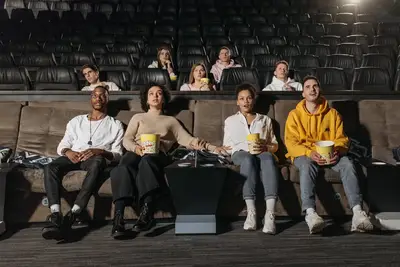
A viewer sits in a dark theater, and suddenly the side walls erupt with light, extending the horizon line of a chase scene. This transition transforms a flat viewing experience into a multi-dimensional environment.
The technical foundation of this immersion lies in how the display expands onto the sidewalls of the theater. By projecting content onto these surfaces, the technology allows certain scenes to wrap around the audience by capturing them in 270 degrees.
This expansion changes how a director manages the frame, as the visual information is no longer restricted to a single central plane.
In a typical setup, the side displays act as an extension of the main screen to heighten the sense of scale. This creates a more encompassing visual field that pulls the viewer into the center of the action.
This immersive film tech relies on precise synchronization to ensure the peripheral vision is engaged without breaking the focus on the main story.
However, the immersive effect may be limited in scenes with minimal peripheral visual data.
What defines the visual innovation cinema experience?
The lights dim, and a wide landscape appears to stretch infinitely toward the corners of the room. The viewer feels the sudden shift in depth as the side walls come alive.
This visual innovation cinema approach uses the theater's architecture to serve the story. The technology expands the movie's display onto the sidewalls of the theater, which provides a sense of vastness that traditional screens cannot achieve.
This method is particularly effective for wide-angle shots or environments that require a sense of overwhelming scale.
By utilizing the side walls, filmmakers can manipulate the viewer's perception of space and distance. This allows for a dynamic use of the theater environment, making the audience feel as though they are standing within the scene rather than just watching it.
The sudden expansion of the frame can heighten emotional tension or illustrate the sheer magnitude of a setting.
However, the visual impact is less pronounced in dark or minimalist settings.
How can directors use ScreenX narrative potential?
A character walks through a narrow hallway, and the side walls suddenly show the vastness of the world outside the door. The narrative weight shifts as the space expands.

Directors can use this tool to enhance the story's emotional beats or to illustrate specific thematic elements. The ScreenX narrative potential lies in its ability to change the viewer's relationship with the character's environment.
When a scene moves from a tight focus to a wide, wrap-around view, the shift in perspective can signal a change in the story's tone.
The technique is best used for specific, impactful moments rather than throughout the entire film. Because the technology relies on the side walls to extend the view, it works most effectively when the visual expansion serves a direct purpose in the plot.
This prevents the extra screen space from becoming a distraction from the central characters.
- Establish the central action on the main screen.
- Extend the visual field to the side walls.
- Integrate environmental elements into the expanded space.
How does the immersive film tech impact the audience?
An audience member glances to the side and sees a sudden burst of color from a flying object in the scene. The sense of presence is immediate and visceral.
The immersive film tech works by engaging the peripheral vision to create a feeling of being surrounded. Because the technology expands the movie's display onto the sidewalls of the theater, the 270-degree coverage makes the boundaries of the screen feel much less intrusive.
This creates a more naturalistic way to experience wide-angle cinematography.
The suddenness of the wrap-around effect can create a physical sensation of movement. When the visual field expands, the brain processes the additional information as part of a larger, unified space. This makes the cinematic world feel more tangible and life-like to the viewer.
In this sequence, the second step provides the most significant sensory shift.
What are the technical requirements for these scenes?
A technician checks the alignment of the side projectors to ensure the image meets perfectly at the corners. The seamless transition is vital for the illusion.
To achieve a successful wrap-around effect, the content must be specifically designed for the three-screen setup. The technology expands the movie's display onto the sidewalls of the theater, requiring careful management of the 270-degree field.

If the content is not properly calibrated for the side walls, the immersion can be lost.
The expansion of the display is not constant but is used for specific cinematic moments. This careful timing ensures that the sudden shift in the visual field remains a powerful tool for the director.
The goal is to maintain the viewer's immersion while using the side walls to augment the primary action.
However, the effect is limited if the theater's side walls are not properly equipped.
The subject here is Kim Jee-woon ScreenX immersion.
The same subject is also called ScreenX movie experience.
The same subject is also called director ScreenX use.
This part also covers Kim Jee-woon visual style.
This part also covers SoundX film impact.
Related
- Korean film box office analysis: How early turnout helps
- What is the movie social impact analysis for this release?
When is the longer screen experience most effective?
The longer screen experience proves most impactful when the narrative requires a sudden juxtaposition between confinement and openness. When a character moves from a tight space, the sudden appearance of the extended screen reveals the broader context of their situation.
This contrast heightens the emotional resonance of the character's journey.
Directors should consider the rhythm of the film when planning these visual expansions. A prolonged use of the extended screen risks desensitizing the audience to the immersive quality. Therefore, the longer screen effect functions best as a dramatic punctuation mark within the storytelling arc.
The comparison between a standard frame and the ScreenX presentation highlights how the visual information changes its scope. The longer screen allows the audience to absorb the environment alongside the action, which is a distinct advantage over a conventional viewing setup.
In this sequence, the second step is the most impactful.




Comments 0