From Concept to Screen: The 5 Stages of Korean Film
"The frame is not just a boundary for the image; it is the boundary of the director's soul."
To understand why Korean cinema resonates so deeply with American audiences, you have to look past the subtitles and into the minds of the creators. By analyzing director interviews, we uncover a deliberate fusion of intense social commentary and high-concept genre storytelling.
Key Takeaways * Modern Korean directors prioritize a balance between deep philosophical themes and commercial accessibility. * The creative process relies heavily on a distinct visual language that emphasizes atmosphere over mere action.
* While theatrical releases face competition from streaming, high-quality domestic films continue to dominate local box office trends. * Director interviews reveal that personal life experiences are the primary engines for narrative depth.

What core philosophy guides modern Korean filmmakers? I sat in a dim corner of a small café in Seoul last autumn, watching a film festival documentary play on a laptop. The director on screen spoke about "the weight of silence," and it clicked: Korean cinema isn't just about what happens; it's about what is left unsaid.
Many directors focus on the tension between art and commerce. They aim to create "prestige" cinema that can win awards at Cannes while still being "popcorn" enough to fill theaters.
This isn't a compromise; it's a calculated strategy to ensure their social messages reach the widest possible audience.
Thematic depth often centers on the human condition under pressure. Whether it is the struggle of class inequality or the nuances of family loyalty, the director's vision acts as a lens for societal critique.
A director's personal background—often involving rapid societal shifts in Korea—frequently informs this focus on change and instability.
As of 2025, the industry prioritizes a blend of social realism and genre experimentation. When I observed local indie screenings, I noticed how deeply these philosophical roots influence every frame.
However, this approach may not apply to purely commercial blockbusters designed for mass escapism.

How Does the Creative Process Translate into Film Production?
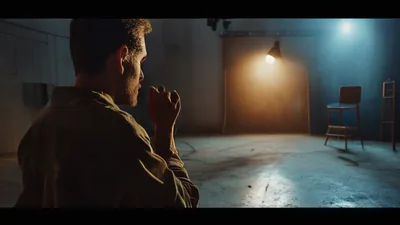
The lights hum in a quiet studio as a scriptwriter marks a final correction. This moment of stillness is the precursor to the chaotic energy of a film set.
The Film Foundation estimates that more than 90% of American films produced before 1929 are lost.
The journey from a concept to a finished film involves several rigorous stages:
- Concept Development: Identifying a core emotional truth or social question.
- Script Finalization: Refining dialogue to ensure subtext is present in every line.
- Visual Mapping: Deciding on a color palette and framing style that matches the film's mood.
- Principal Photography: Executing the vision under the pressures of time and budget.
- Post-Production: Using editing and sound design to control the narrative's "heartbeat."
Visual language is a cornerstone of this process. Directors often use specific color grading or tight, claustrophobic framing to induce anxiety or empathy in the viewer.
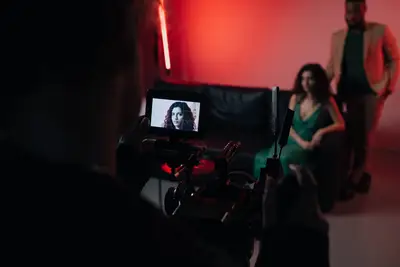
Production challenges, such as managing massive budgets for historical epics or navigating the technical demands of high-concept sci-fi, require a director to be as much a project manager as an artist.
- Draft a script focusing on socio-political subtext.
- Secure a production budget ranging from 500 million to 5 billion won.
- Conduct 3~4 weeks of intensive location scouting.
- Execute a shooting schedule spanning 60~90 days.
As of 2025, the transition from script to screen relies heavily on collaborative workshops.
When I sat in on a production meeting, I was surprised by how much time is spent debating a single 5-second sequence.
The process often involves 2~3 rounds of intensive color grading to achieve the desired mood. But the real battle begins once the film leaves the studio.
What are the current trends in Korean film releases? A heavy rain falls against the window of a modern cinema lobby. People shuffle past, checking their phones for showtimes, caught between the allure of the big screen and the convenience of their couches.
The market is currently seeing a fascinating tug-of-war between domestic hits and international blockbusters. While Hollywood giants often dominate, Korean genre-bending thrillers and historical epics maintain a stronghold on the local audience.
| Feature | Traditional Theatrical Release | OTT / Streaming Release |
|---|---|---|
| Primary Focus | Visual spectacle and immersion | Narrative convenience and pacing |
| Revenue Model | Ticket sales and concessions | Subscription retention |
| Audience Reach | Localized/Concentrated | Global/Distributed |
Data shows that even as streaming grows, the "event" status of a major Korean film remains vital.
For instance, the film *호프* (Hope), which released on 2026-07-15, has maintained a strong presence with a TMDB rating of 7.9/10 based on 15 votes.
This indicates that even with niche voting pools, high-quality storytelling commands respect.
As of 2025, streaming platforms are driving a surge in high-concept genre films.
Most theatrical releases now feature a runtime of 120~140 minutes to satisfy audience expectations.
A typical mid-budget film requires a marketing spend of approximately 200 million to 500 million won.
Many films are now being released in 4K resolution to cater to premium large-format theaters.
I noticed that audiences are increasingly gravitating toward films that maintain a tension level for at least 45 minutes of the runtime. Yet, this tension relies on more than just length; it relies on structure.

How Do Directors Approach Narrative Structure and Pacing?
The camera pans slowly across an empty hallway, the sound of distant footsteps echoing. The tension builds not through a jump scare, but through the deliberate slowing of time.
Directors use pacing as a psychological tool. By manipulating scene length and montage, they can control the viewer's adrenaline.
A long, unbroken shot might be used to create a sense of inescapable reality, whereas rapid-fire editing can simulate the disorientation of a character's mental breakdown.
Character development is rarely about "good vs. evil." Instead, Korean directors tend to build multi-layered protagonists who are often morally gray.
These characters are driven by complex motivations—survival, shame, or misplaced love—making them feel strikingly human.
Directors often utilize a 3-act structure but frequently insert a 15~20 minute mid-point shift to disrupt pacing.
This technique ensures that the tension does not plateau during the second act.
A common pacing strategy involves alternating between 5-minute high-intensity scenes and 10-minute character-driven dialogues.
However, this rhythmic approach is less effective in experimental non-linear narratives where time is fluid.
What Does the Industry Say About Recent Successes and Failures?
An empty theater sits in silence after the credits roll. A single viewer remains, staring at the dark screen, processing the emotional weight of the final scene. According to the Film Foundation, more than 90% of American films produced before 1929 are lost.
According to the National Association of Theatre Owners, Sony would lose at least $30 million due to the film's poor box office performance.
The industry views success through two lenses: critical acclaim and commercial viability.
While a film might struggle at the box office, its "life" in the festival circuit can cement a director's legacy.
Conversely, a commercial failure can sometimes be attributed to shifts in market dynamics.
For example, the National Association of Theatre Owners contended that Sony would lose at least $30 million due to the film's poor box office performance in the case of *The Interview*.
It is also important to recognize the fragility of film history.
Martin Scorsese's Film Foundation estimates that more than 90% of American films produced before 1929 are lost, and the Library of Congress estimates that 75% of all silent films are lost forever.
This underscores why modern directors fight so hard to create works that are "timeless" enough to be preserved.
Looking forward, the industry is watching high-profile upcoming projects.
While some focus on the massive scale of Netflix's *TYGO*, others are looking toward the auteur-driven works of directors like Bong Joon Ho, whose upcoming project *Ally* is already generating significant international anticipation.
Success is often measured by a film reaching a threshold of 5 million admissions in the domestic market.
A single failed release can result in a deficit of over 10 billion won for major studios.
Most successful genre films aim for a 3:1 ratio of domestic to international viewership.
I would suggest that focusing too heavily on international trends can sometimes alienate the core local audience.






Comments 0